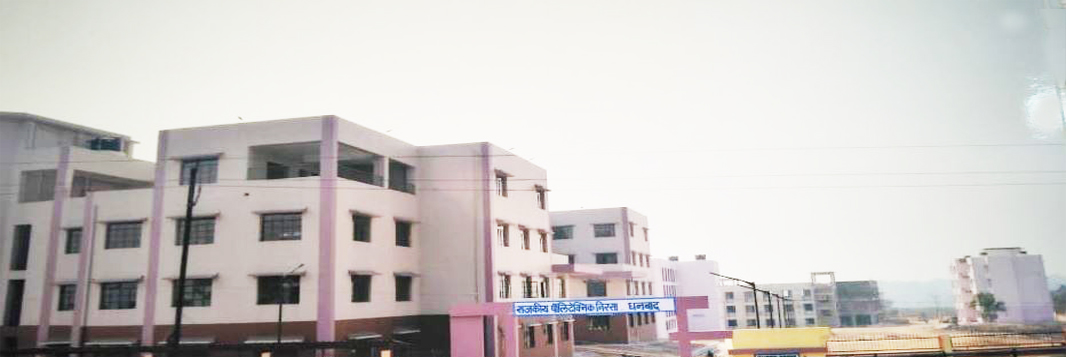
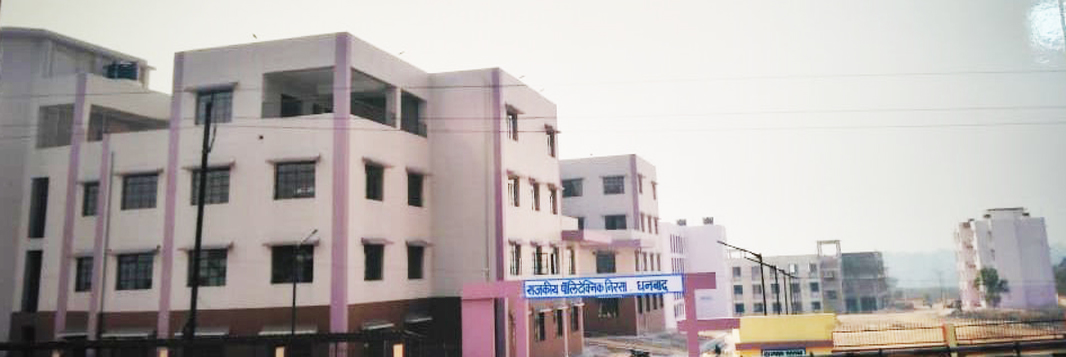
For many diploma students, a scholarship is not just an extra benefit. It can decide whether a student continues the course with confidence or struggles with fees, travel, books, hostel costs, exam expenses and basic academic needs. Government Polytechnic Nirsa, located in Dhanbad, Jharkhand, serves students who often come from families where technical education is seen as a direct path to stable employment. In such a setting, financial support matters because a diploma course requires regular attendance, workshop practice, tools, uniforms, project work and repeated academic spending across three years.
In 2026, students of Government Polytechnic Nirsa should look at scholarships in a practical way. The college itself is a government technical institution, but most financial support usually comes through state and central government schemes rather than through a private college fund. The most relevant route for many students is the Jharkhand post-matric scholarship system, especially for students from SC, ST and backward-class communities who meet income and residence conditions. Some students may also be eligible for central schemes through the National Scholarship Portal, depending on their category, course status and personal background.
The main point is simple: students should not assume that scholarship support is automatic. Eligibility, documents, deadlines, bank details and institutional verification all matter. A student who belongs to an eligible category may still lose support if the form is incomplete, the income certificate is outdated, the bank account is not active, or the application is not verified on time. That is why understanding the process early is as important as meeting the basic eligibility rules.
Why scholarship support matters for diploma students
Diploma education is often described as affordable compared with full engineering degrees, but that does not mean it is financially easy for every family. A student at Government Polytechnic Nirsa may need to manage tuition-related payments, examination fees, travel from nearby towns or villages, stationery, drawing sheets, workshop material, digital access, mobile data, coaching support, hostel or rented accommodation, and personal expenses. For families with irregular income, even a moderate academic cost can become stressful when several payments come together.
Scholarships reduce this pressure by supporting students who are already enrolled in recognised courses. For diploma students, this is especially important because technical education is linked with attendance and practical training. Missing classes due to financial difficulty can affect internal marks, laboratory confidence and final performance. A scholarship does not replace hard work, but it gives students a more stable base from which to study.
Government Polytechnic Nirsa has a special place in the Dhanbad region because it is connected with technical education in an area known for mining, industry and engineering-related employment. Students who join diploma programmes usually expect the course to help them move toward technician roles, supervisory work, further engineering study, apprenticeships or government and private-sector opportunities. Financial aid can protect that journey from being interrupted.
Another reason scholarships matter is that many eligible students are first-generation learners. Their families may not know how online applications work, how to upload documents, how income limits are checked or how bank-linked benefit transfers are processed. A clear understanding of scholarship rules can prevent avoidable mistakes. The strongest applicants are not always those with the highest marks; they are often the ones who prepare documents early, follow the portal carefully and stay in contact with the institute office during verification.
Scholarships also encourage discipline. Most schemes expect students to remain enrolled, submit genuine documents and maintain academic progress. This creates a useful habit: students learn to keep certificates safe, track deadlines, check official notices and take responsibility for their own academic records. These habits are valuable beyond the scholarship process because they also help during placement registration, apprenticeship applications and future admission procedures.
Main scholarship routes available in 2026
Students at Government Polytechnic Nirsa should begin with the schemes most likely to apply to a Jharkhand government diploma institution. The most important option for many students is the Jharkhand post-matric scholarship, commonly handled through the e-Kalyan system. This route generally supports eligible SC, ST and backward-class students who are permanent residents of Jharkhand and are studying beyond matric level in recognised courses.
For diploma students, the word “post-matric” is important. It means education after Class 10. A three-year polytechnic diploma normally falls into this broad post-matric category when the scheme rules recognise the course and institution. Students should still check the current year’s notification because scholarship portals can update rules, deadlines, document formats and income conditions.
Central government schemes may also be relevant for some students. The National Scholarship Portal brings together different schemes for students from minority communities, students with disabilities, merit-based categories and other eligible groups. Not every scheme will suit a polytechnic student, and not every student can apply to every category. Still, it is useful to check because the portal may show schemes based on state, course level, category and income.
Some support may not be labelled as a “Government Polytechnic Nirsa scholarship” but can still help students of the institute. This includes welfare department scholarships, category-based fee reimbursement, maintenance allowance, minority scholarships, disability support, merit-cum-means schemes and other government-linked financial aid. The student’s personal eligibility matters more than the college name alone.
The following overview shows the main routes a student should check before assuming that no help is available.
| Scholarship route | Who should check it | Main eligibility idea | What it may support |
|---|---|---|---|
| Jharkhand post-matric scholarship through e-Kalyan | Jharkhand domicile students from SC, ST or backward-class categories | Category, income, residence, recognised course and valid documents | Fees, academic allowance or maintenance support according to scheme rules |
| National Scholarship Portal schemes | Students matching central scheme categories | Depends on scheme, such as minority status, disability, merit or income | Course-related financial assistance, depending on the selected scheme |
| Institute-level guidance and verification | All students applying for government scholarships | Correct enrolment details and confirmation by the institution | Application verification, fee details and bonafide support |
| Category or welfare department support | Students from eligible social or economic groups | Valid caste, income and residence certificates | Reimbursement or allowance as approved by the department |
| Merit-linked opportunities | Students with strong academic records | Marks, rank, course performance and scheme-specific rules | Limited financial awards where available |
This table should be treated as a starting map, not as a final approval list. Scholarship rules can change between academic years, and the exact amount may depend on the student’s category, course group, hostel or day-scholar status, family income and approval by the department. The safest approach is to check the current portal notification, confirm the college details in the form and keep copies of every submitted document.
Who can usually receive support
The students most likely to receive scholarship support in 2026 are those who meet three broad conditions: they belong to an eligible category, they study in a recognised post-matric course, and their family income remains within the prescribed limit. For Government Polytechnic Nirsa students, this usually means that SC, ST and backward-class students from Jharkhand should carefully check the state post-matric scholarship route.
A student must normally be a genuine resident of Jharkhand to claim the state scholarship. This is why the residence certificate is important. A student may be studying at Government Polytechnic Nirsa, but the scheme may still ask for proof that the applicant belongs to Jharkhand. Students from outside the state should not rely on assumptions; they need to check whether they are eligible under their own state’s scholarship system or under any central scheme.
Category documents are equally important. SC, ST and backward-class applicants generally need a valid caste certificate issued by the competent authority. The name, spelling, category, certificate number and issuing authority should be checked before uploading. Errors in names or mismatched records can delay or block verification. Students should make sure their Aadhaar details, bank details and certificates show consistent personal information.
Family income is another key condition. Scholarship schemes are designed to support students from economically weaker families, so the income certificate must be valid for the relevant period and issued by the proper authority. Students should avoid using old certificates without checking the current year’s requirement. A certificate that was accepted in a previous year may not automatically work for a fresh application or renewal.
Academic status also matters. Students should be properly admitted to the diploma programme and should have a valid enrolment record. Fresh applicants usually need admission proof, while renewal applicants may need previous-year marks and proof that they continued the course. Students with backlogs should not panic without checking the rules, but they should read the renewal conditions carefully because academic progress can affect approval.
Students should prepare the following documents before starting the application, because incomplete paperwork is one of the most common reasons for delays.
• Recent passport-size photograph.
• Aadhaar card or accepted identity proof.
• Caste certificate, where applicable.
• Residence certificate or domicile proof.
• Current income certificate issued by the competent authority.
• Bonafide certificate from the institute.
• Fee structure or fee receipt, if required.
• Previous qualifying examination mark sheet.
• Bank passbook with correct account details.
• Student and parent or guardian signatures, where the form requires them.
• Active mobile number and email address for login and updates.
These documents should be clear, readable and consistent. A student should not upload blurred scans, cropped certificates or files that hide important details. The name in the scholarship form should match the academic records as closely as possible. If there is a spelling difference between Aadhaar, bank passbook and college records, it should be corrected before the final submission whenever possible.
How students should apply without common mistakes
A scholarship application should not be treated like a last-minute formality. Students often face problems because they wait until the final week, discover that a certificate is missing, or upload documents in the wrong format. A better method is to prepare in stages: collect documents, check eligibility, register on the correct portal, fill the form slowly, review each entry and submit only after confirming the details.
For the Jharkhand post-matric scholarship, eligible students usually need to use the e-Kalyan portal when applications are open. The student creates or uses a login, selects the correct scholarship type, fills personal and academic details, enters bank information, uploads documents and submits the form. After submission, the application normally goes through institute-level and department-level verification. Students should track the status instead of assuming that submission alone means approval.
Bank details deserve special attention. Scholarship funds are generally transferred through direct benefit systems, so the bank account should be active and usable. The student’s name in the bank account should match the application details. If Aadhaar seeding or bank verification is required, students should complete it early. A dormant account, wrong IFSC code or mismatched name can delay payment even after the scholarship is approved.
Course and institute details should also be entered carefully. Students should select the correct institution, course, year and admission details. A diploma student should not choose a wrong course level just because the option looks similar. If there is confusion, the institute office or scholarship nodal person should be asked before final submission. Correct institutional verification is essential because the college confirms that the student is actually enrolled and eligible.
Students applying through the National Scholarship Portal should use the eligibility tool and scheme guidelines before starting. The NSP may allow students to apply for schemes based on category and course, but each scheme has its own conditions. Some schemes are for minority students, some for students with disabilities, some for meritorious students, and some may not cover every diploma course. Reading the scheme guidelines prevents wasted effort.
A careful student should also keep digital and printed records. After submitting the form, save the application number, acknowledgement, uploaded documents and login details. If the portal later asks for correction, these records help the student respond quickly. It is also wise to check SMS and email updates because scholarship portals often send status information through registered contact details.
What can stop an eligible student from getting support
Many scholarship problems do not happen because the student is ineligible. They happen because of avoidable mistakes. A student may belong to the right category, study in the right course and have the right income level, yet still face rejection or delay due to wrong documents, missed deadlines or poor follow-up. Understanding these risks helps students protect their application.
One common issue is late submission. Scholarship portals are active for a limited period, and deadlines can close without extension. Students who wait for friends to apply first may lose valuable time. Even if the portal stays open, the institute also needs time to verify applications. A form submitted at the last moment may create unnecessary pressure and leave no space for correction.
Another issue is document mismatch. If the student’s name is written differently in the mark sheet, Aadhaar card, bank passbook and caste certificate, verification may become difficult. Small spelling variations are common, but they should not be ignored. Students should try to align documents before applying or ask the relevant office how to handle the mismatch.
Income certificate problems are also frequent. Some students upload old income certificates, certificates issued to the wrong family member, or documents that do not clearly show annual income. Since income is a core eligibility condition, this can create rejection risk. The certificate should be valid for the scholarship year and issued according to the current rules.
Bank-related delays are another serious concern. The scholarship may be approved on paper but not reach the student if the bank account is inactive, closed, wrongly entered or not properly linked for benefit transfer. Students should check their bank account before applying and avoid using someone else’s account unless the scheme specifically permits it.
The final risk is lack of status tracking. Submission is only one part of the journey. The application may need institute verification, correction, district-level processing or department approval. Students should log in regularly and respond if correction is requested. A small error can be fixed if noticed early, but it may become a rejection if ignored for weeks.
Practical advice for Government Polytechnic Nirsa students
Students at Government Polytechnic Nirsa should build their scholarship plan around the academic calendar. The best time to prepare is not when the deadline is near, but when admission or renewal documents become available. Freshers should collect admission proof, fee details and identity documents immediately after joining. Senior students should keep previous marksheets and renewal documents ready before the portal opens.
The institute office plays an important role because scholarship applications often need bonafide certificates, fee structure confirmation and verification. Students should not treat the office as a place to visit only after a problem appears. A polite early visit can clarify which documents the college provides, which details students must fill themselves and what timeline the institute expects.
Students should also talk to seniors, but they should not copy old information blindly. A senior’s experience may be useful, yet scholarship rules can change. Deadlines, income limits, file-size rules, verification steps and portal design may differ from the previous year. The correct habit is to use senior guidance for practical tips and official notifications for final decisions.
For students from families with limited digital access, the application process may feel difficult at first. Still, it is manageable when done step by step. Students can use a trusted cyber café, college computer facility or Common Service Centre if available, but they should personally review the form before submission. No one should submit a form on behalf of a student without showing the final details.
Parents should also be involved, especially for income, bank and caste documents. Many students discover too late that a certificate is expired or that bank details are outdated. A short family discussion before applying can prevent repeated visits to government offices. It also helps parents understand that scholarship payment may take time after approval and should not be expected immediately after submission.
The strongest approach is simple: check eligibility early, prepare documents carefully, submit before the rush, track the status and stay in touch with the institute. A scholarship is not guaranteed just because a student needs support, but a complete and accurate application gives the student the best chance of receiving help.
Conclusion
Scholarships for Government Polytechnic Nirsa students in 2026 can make technical education more manageable for those who meet the right conditions. The most important support route for many students is the Jharkhand post-matric scholarship system, especially for SC, ST and backward-class students with valid residence, income and category documents. Some students may also find suitable schemes through the National Scholarship Portal, depending on their profile.
The key lesson is that eligibility and preparation must go together. A student needs more than a category certificate or a low family income. The form must be accurate, documents must be valid, bank details must be correct and the application must pass institutional verification. Students who begin early usually avoid the most painful mistakes.
For a diploma student, scholarship support is not only about money. It protects attendance, reduces family pressure and allows the student to focus on workshops, examinations, projects and future employment. Government Polytechnic Nirsa students who treat the process seriously can turn financial support into a real academic advantage.