Champions League 2026-27: format and calendar
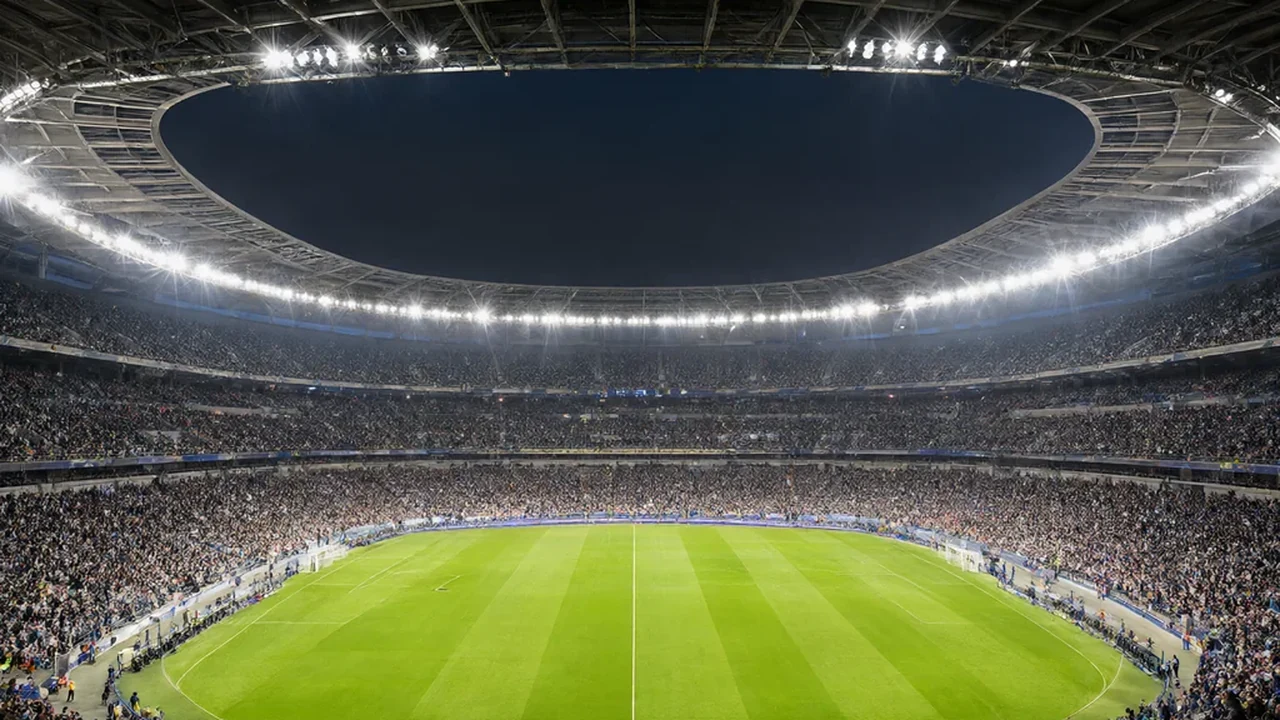
The Champions League has been a 36-club competition with a single league table since the format change, and the structure is still the thing most readers get wrong. There are no groups. There is one table, eight matches per club, and a set of cut-off lines that decide who goes straight through, who plays an extra round and who is eliminated before Christmas.
With the league phase running from September into late January, October is the point where the table starts to separate. Two matchdays are usually enough to create a top eight, a middle band and a bottom group, and the middle band is where the competition gets interesting.
The shape of the league phase
Thirty-six clubs play eight matches each, four at home and four away, against eight different opponents. The fixture list is drawn so that every club faces two opponents from each of the four seeding pots, which is the mechanism that replaced the old group stage and its repeat fixtures.
Eight matches per club across 36 clubs produces 144 fixtures in the league phase. That is the number to remember when someone talks about the expanded calendar, because it is the reason domestic league weekends have been squeezed and the reason squad rotation has become a structural issue rather than a tactical preference.
| Item | Value |
|---|---|
| Clubs in the league phase | 36 |
| Matches per club | 8 |
| Home and away matches per club | 4 and 4 |
| Total league phase matches | 144 |
| Clubs straight to the round of 16 | 8 |
| Clubs into the knockout play-off | 16 |
| Clubs eliminated | 12 |
What each finishing position means
First to eighth go directly to the round of 16 and skip a round. That is the prize, and it is worth more than prestige: two fewer matches in February, at the point of the season when domestic fixtures pile up and injuries accumulate.
Ninth to 24th enter a two-legged knockout play-off. The clubs finishing ninth to 16th are seeded and play the second leg at home. The clubs finishing 17th to 24th are unseeded and play the first leg at home. That seeding detail is the difference between a favourable draw and a trip to a group winner in the middle of winter.
Twenty-fifth to 36th are eliminated. There is no transfer to another competition, which makes the bottom third of the table unusually harsh: a club can be mathematically out with two matchdays still to play, and those two fixtures become dead rubbers in a schedule that has no room for them.
Why the middle band is the real story
In a 36-team table, the gap between eighth and ninth is the most consequential line in European football. A club that finishes ninth has done almost everything a top-eight club did, and gets two extra matches and an unseeded draw as a reward.
That asymmetry shapes how coaches approach the league phase. Points are worth the same everywhere, but the marginal value of the eighth place is enormous, and the marginal value of 24th place is survival. The teams in between are managing two different objectives at once, and the table rarely makes that visible.
The calendar, in outline
The league phase is played across eight matchdays from September to late January, with the final two rounds played simultaneously so that no club can benefit from knowing a result elsewhere. The knockout play-off follows in February, the round of 16 in March, the quarter-finals in April and the semi-finals in late April and early May.
Exact dates are published by the competition organisers and shift slightly each season, which is why any calendar reference should be checked against the official schedule rather than a summary. What does not shift is the sequence: league phase, play-off, round of 16, quarter-final, semi-final, final.
What it means for squad management
- Eight league matches plus a possible two-legged play-off is a maximum of ten European fixtures before the round of 16.
- Clubs finishing in the top eight remove two matches from the densest part of their season.
- The January matchdays fall in the same month as the domestic winter programme in England.
- Rotation in October is usually about protecting a squad for January, not about the match in front of it.
- A club eliminated in the league phase has no European football after January, which is either a relief or a financial problem depending on the balance sheet.
The Champions League page carries the league table with matches played and goal difference, and the match calendar shows the eight matchdays alongside the domestic fixtures they sit next to.
The seeding detail that decides draws
Finishing ninth rather than 24th matters twice. The seeding decides which leg is at home, and in a two-legged tie the second leg at home is a measurable advantage: a team that knows what it needs can manage the first leg differently. The clubs in ninth to 16th get that advantage. The clubs in 17th to 24th do not.
That is why the last two matchdays of the league phase matter even for clubs with nothing to play for in terms of qualification. A place inside the top 16 is worth chasing, and a place inside the top eight is worth more than the two matches it saves.
How to read the table in October
Ignore the points total for a moment and look at matches played. With eight matches per club, the table is only fully balanced after matchday eight, and a club that has played the tougher half of its draw will look worse than it is until January.
Then look at goal difference, which is the first tiebreak and therefore worth more here than in a domestic league where head-to-head or goals scored may intervene. A three-goal win in matchday two can decide a top-eight place in matchday eight, and that is not a hypothetical: it is the arithmetic of a 36-team table with a hard cut after eighth.
The format rewards consistency over brilliance and squad depth over a single great night. That is the design, and after two months of it, the table usually reflects it.