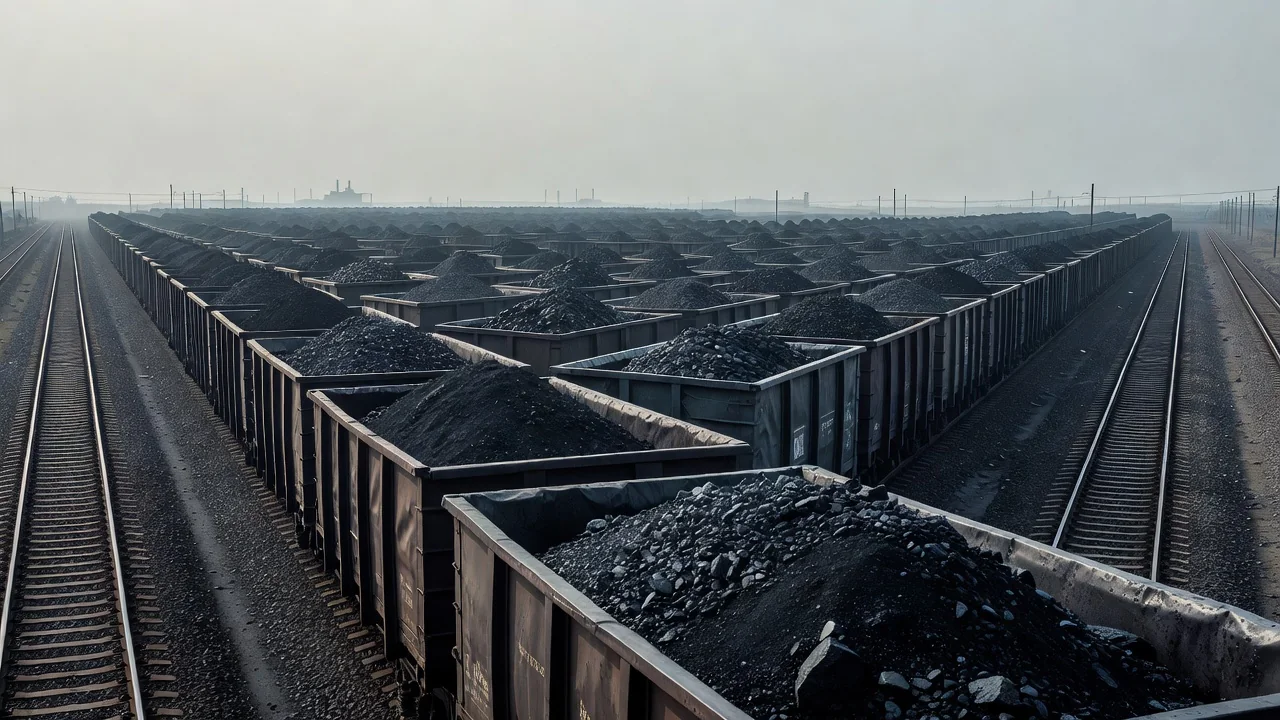
Dhanbad, India’s Coal Capital: Why Mining Education Grew Here
Few districts in India are as completely shaped by a single industry as Dhanbad. The city sits on the Jharia coalfield — one of the oldest and richest mining regions in the country — and coal has defined its economy, its landscape and its institutions for well over a century. It is no accident that the region's oldest technical institute, Government Polytechnic Nirsa, began life in 1958 as the Mining Institute, Dhanbad.
For a student considering a technical career in 2026, understanding this context matters. The coalfield is not just history; it is a living employment ecosystem of public sector mines, contractors, workshops, transport networks and infrastructure projects — and it continues to absorb trained diploma holders every year.
The Jharia coalfield at a glance
The Jharia coalfield covers roughly 450 square kilometres between Dhanbad and the Damodar river and holds some of India's most valuable coking coal reserves. Mining here began in the nineteenth century, and the field remains one of the largest contributors to the country's coal output.
| Anchor institution / employer | Role in the region |
|---|---|
| Bharat Coking Coal Ltd (BCCL) | Coal India subsidiary operating the bulk of the Jharia collieries; major recruiter and apprenticeship provider. |
| IIT (ISM) Dhanbad | The Indian School of Mines, founded 1926 — India's premier mining university, anchoring the city's mining education ecosystem. |
| Central Mine Planning & Design Institute (CMPDI) | Planning and design arm of Coal India, headquartered in Ranchi with a strong Dhanbad presence. |
| Steel and washery operators | Tata Steel and other coking coal consumers with collieries and washeries in and around the district. |
| Contracting and services | Hundreds of mine contractors, transport operators, workshops and fabrication units supporting the mines. |
Why mining education grew here
Technical education followed the industry. The Indian School of Mines arrived in 1926 to train mining engineers; the Mining Institute at Nirsa followed in 1958 to train the technicians and supervisors below them. Between the two institutions, Dhanbad developed a complete pipeline of mining manpower — from certificate holders and diploma supervisors to graduate engineers and researchers.
This layering still benefits a diploma student today. Mines in the district need surveyors' assistants, overman-track supervisors, mechanical maintenance hands and civil site staff — precisely the profiles a polytechnic produces. Field visits, vocational training slots and apprentice openings are physically close to the campus in a way that no other district in Jharkhand can replicate.
The region is changing — and so is the industry
The coalfield of 2026 is not the coalfield of 1958. Mechanisation has replaced much manual work; opencast operations have expanded; land reclamation, mine closure planning and environmental management have become serious professions in their own right. The Jharia master plan's fire control and rehabilitation works have reshaped entire neighbourhoods.
- Mechanised opencast mines need operators, maintenance technicians and survey staff with digital skills.
- Environmental and safety compliance has created new supervisory roles around every working mine.
- Coal evacuation — rail sidings, weighbridges, road transport — sustains a large logistics economy.
- Renewable and diversification projects are beginning to appear on reclaimed mining land.
What this means for a diploma student
A student at Government Polytechnic Nirsa studies inside this economy, not beside it. The region's employers understand the value of the diploma because they were built on it; many senior supervisors and managers in the coalfield began their careers on exactly the same benches and drawing boards.
Coal will not dominate forever, and the district is already planning for a more diversified future. But the skills a diploma builds — measurement, machinery, safety discipline, drawing, site supervision — transfer directly into construction, manufacturing, logistics and infrastructure. Studying in the coal capital is less a bet on one commodity than an apprenticeship with an entire industrial region.
What the coalfield means for a student today
Coal's future is debated nationally, but its present in Dhanbad is measured in jobs. The mines, the railways that serve them, the power plants they feed and the contractors that maintain all of it form a labour market that absorbs technical diploma holders continuously. A student at Nirsa studies inside that market rather than hoping to reach it from outside.
The district also teaches realism. Mining regions carry costs, from subsidence to air quality, and a mining-educated graduate understands both sides of the industry from the start. Employers value that groundedness: a technician who knows the coalfield's conditions does not need to be broken in, and in the Jharia belt that familiarity begins at admission.