
Diploma in Mining Engineering: salary, job roles and career path in India 2026
India sits on one of the largest mineral reserves in the world, and the mining sector keeps expanding to meet the demands of steel, power, construction and critical minerals. Behind every productive mine is a team of trained professionals who keep operations safe, efficient and on schedule. A diploma in mining engineering is one of the fastest practical routes into that team — a three-year programme that opens doors to supervisory roles in coal, metal and mineral mines across the country. For students who want early employment, strong government job prospects and a clear ladder of promotion, this diploma remains one of the most underrated career choices in technical education.
What the diploma actually covers
The programme runs for three years across six semesters and is offered by government polytechnics, private engineering colleges and a few universities recognised by AICTE. Admission is typically merit-based, using marks from Class 10 or Class 12, though some states conduct their own polytechnic entrance tests. The eligibility threshold is generally a pass in Class 10 with Science and Mathematics from a recognised board, with minimum aggregate marks ranging from 35% to 55% depending on the institution.
The curriculum blends classroom theory with substantial lab and field work. Students move from foundational science and mathematics in the first year into specialised mining subjects by the second and third years. Core topics include mining geology, mine surveying, surface and underground mining methods, drilling and blasting techniques, mine environmental engineering, rock mechanics, mine machinery and mine legislation. Practical training in underground mines is a mandatory component — usually scheduled between semesters — so that students experience real working conditions before they graduate.
Government polytechnics keep fees remarkably low, often between ₹7,800 and ₹40,000 for the entire three-year course. Private institutions charge more, typically ranging from ₹50,000 to ₹4.5 lakh for the full programme. Scholarships and fee waivers are widely available for reserved category students and those from economically weaker sections, making the diploma financially accessible to a broad range of applicants.
Salary expectations at every stage
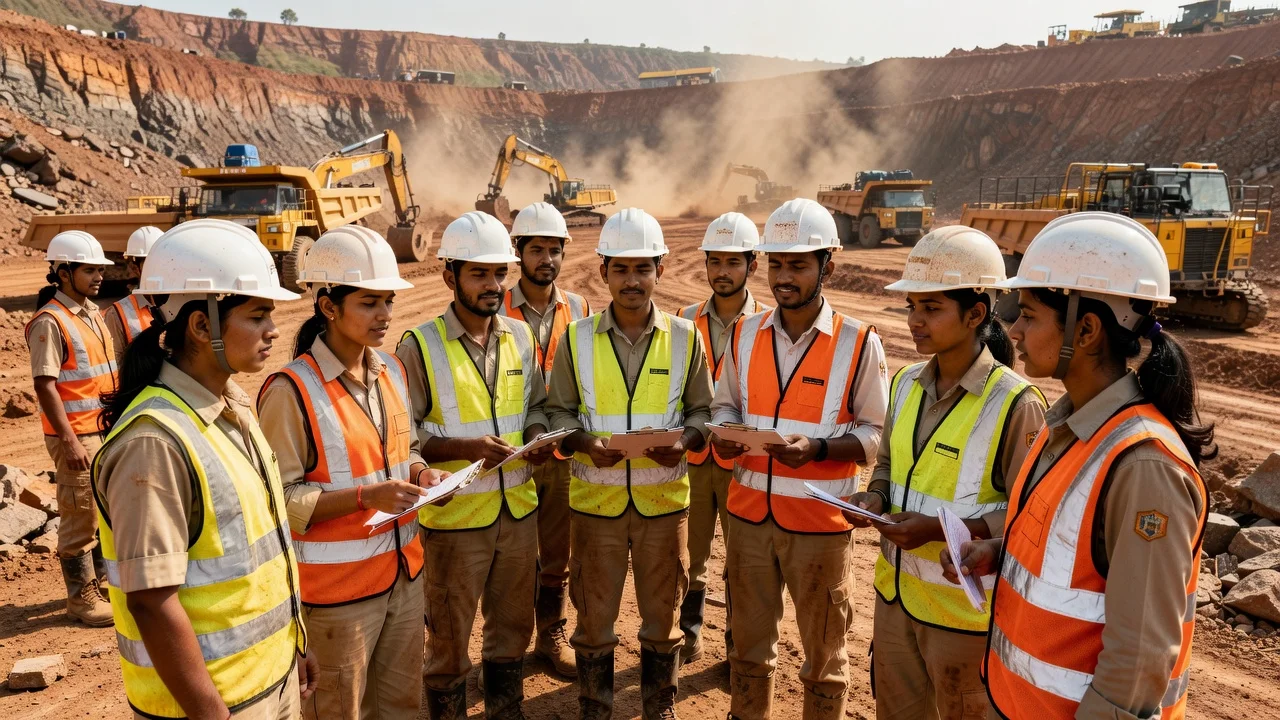
One of the strongest draws of this diploma is the salary trajectory, especially for those who land positions in public sector undertakings. Pay depends on several factors — the hiring company, whether the posting is underground or opencast, the state of operations and the certifications the candidate holds. Below is a realistic picture of what diploma holders earn at different points in their careers.
| Experience level | Typical job role | Monthly salary (₹) |
|---|---|---|
| 0–1 year | Trainee or junior mining engineer | 18,000 – 30,000 |
| 1–3 years | Mining technician or supervisor | 25,000 – 40,000 |
| 3–7 years | Senior diploma mining engineer | 40,000 – 65,000 |
| 7–15 years | Mining foreman or overman level | 65,000 – 1,00,000 |
| 15+ years | Senior technical supervisor | 1,00,000 – 1,20,000+ |
These figures represent the general range across both private and public sector employers. In Coal India and its subsidiaries — which recruit diploma holders in significant numbers every year — the starting basic pay under the latest National Coal Wage Agreement (NCWA-XI) sits around ₹47,330 per month for posts like Mining Sirdar and Junior Overman, before adding dearness allowance, attendance bonus, special allowance, HRA and transport subsidy. When all components are included, the total monthly package for a fresh PSU recruit can exceed ₹60,000. Underground postings attract additional risk allowances that can boost take-home pay by ₹10,000 to ₹25,000 per month.
Private mining companies and contract-based roles tend to pay less initially and offer fewer long-term benefits, but they can serve as a stepping stone for gaining the field experience needed to clear DGMS competency exams. Over time, the gap between private and public sector pay narrows considerably for those who accumulate certifications and move into senior supervisory positions.
Key job roles after the diploma
A diploma alone qualifies graduates for entry-level technical positions, but most supervisory roles in Indian mines require an additional statutory certification from the Directorate General of Mines Safety (DGMS). The combination of a diploma plus the right DGMS certificate is what unlocks the highest-paying and most stable jobs in the sector.
The following are the most common roles diploma holders move into:
- Mining Sirdar — a frontline supervisory position in coal mines, responsible for monitoring safety, overseeing daily extraction activities and ensuring compliance with ventilation and support regulations. Requires a Mining Sirdar's Certificate of Competency from DGMS.
- Junior Overman — a step above Mining Sirdar, this role involves coordinating production schedules, managing crews and maintaining safety standards across a section of the mine. Requires an Overman's Certificate of Competency along with Gas Testing and First Aid certificates.
- Mine Surveyor — responsible for measuring and mapping mine workings, calculating volumes and maintaining accurate plans of underground and surface operations. Requires a Surveyor's Certificate of Competency.
- Assistant Foreman (Trainee) — an entry-level supervisory role in some subsidiaries, often filled through direct recruitment by companies like WCL and SECL, with training provided on the job.
- Mining Technician — a general technical role supporting drilling, blasting, equipment operation and production monitoring, typically available in private mines without mandatory DGMS certification.
- Safety Officer — focuses on enforcing safety protocols, conducting audits and training workers on hazard prevention. Some companies require additional safety certifications alongside the diploma.
Each of these roles carries a different level of responsibility and pay. What they share is a clear path upward — with enough experience and the right certifications, a diploma holder can eventually reach positions like Mine Foreman, Second Class Mine Manager and even First Class Mine Manager, which are among the most senior statutory roles in the Indian mining hierarchy.
How DGMS certification shapes your career
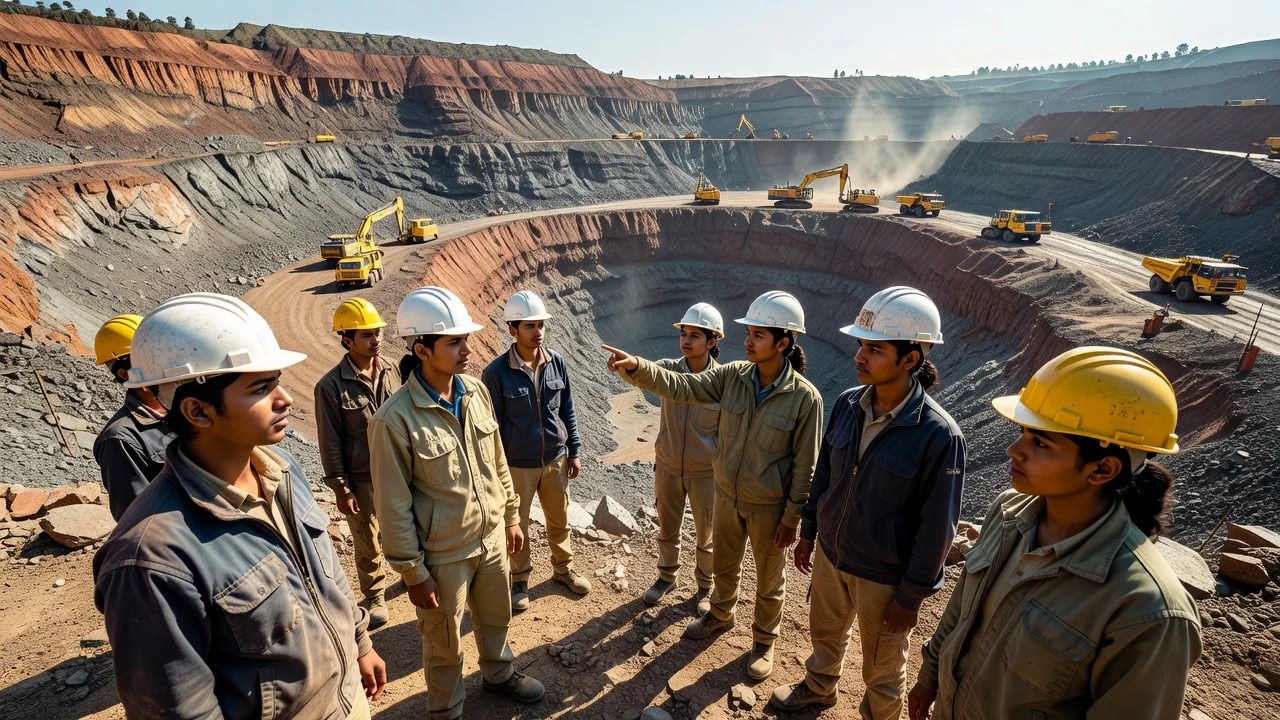
The Directorate General of Mines Safety, headquartered in Dhanbad, Jharkhand, is the national regulatory body that certifies competency for supervisory and managerial roles in Indian mines. Its certificates are not optional — they are a legal requirement under the Coal Mines Regulations (CMR) 2017 for coal mines and the Metalliferous Mines Regulations (MMR) 1961 for metal mines.
DGMS conducts computer-based examinations across the country, typically once or twice a year, for certificates including Mining Sirdar, Overman, Foreman, Surveyor, Mine Manager (First Class and Second Class), Blaster and Gas Testing. Application fees are modest — ranging from ₹50 for a metal mine Foreman certificate to ₹1,200 for a First Class Mine Manager certificate — and payments are processed through the BHARATKOSH portal. Candidates must submit documents proving age, educational qualification, medical fitness, character and relevant mining experience, and the application must reach DGMS within 21 days of fee payment.
The examination is rigorous. For most certificates, candidates need to score at least 50% in each subject of the computer-based test. Preparing well in advance — ideally starting during the final year of the diploma — gives candidates a head start, especially since many coaching platforms and polytechnic colleges offer dedicated DGMS exam preparation.
Top recruiters and where the jobs are
The mining sector in India is dominated by public sector undertakings, which collectively employ tens of thousands of diploma holders. Coal India Limited — the single largest coal producer in the world — and its subsidiaries like South Eastern Coalfields (SECL), Mahanadi Coalfields (MCL), Western Coalfields (WCL) and Northern Coalfields (NCL) regularly announce recruitment drives for Mining Sirdar, Junior Overman, Surveyor and Assistant Foreman positions. Selection is usually through a computer-based test followed by document verification and a medical examination.
Beyond Coal India, the hiring landscape includes:
- NMDC Limited — India's largest iron ore producer, with operations in Chhattisgarh and Karnataka, recruiting diploma holders for technical and supervisory roles.
- Hindustan Zinc Limited — a Vedanta Group company and the world's second-largest zinc producer, with mines across Rajasthan.
- Singareni Collieries Company Limited (SCCL) — a joint venture between the Government of Telangana and the Government of India, focused on coal mining in Telangana.
- Neyveli Lignite Corporation (NLC India) — engaged in lignite mining and power generation, primarily in Tamil Nadu.
- Private mining and mineral processing companies — including Vedanta Resources, JSW Steel, Tata Steel, UltraTech Cement and various limestone, manganese and bauxite mining firms across Odisha, Jharkhand, Chhattisgarh and Rajasthan.
Recruitment notifications typically specify the required diploma, DGMS certificate and experience. Some posts accept a diploma alone as the minimum qualification, while others ask for a diploma plus a valid competency certificate. Keeping track of openings on company portals and employment news is essential, as many recruitment windows stay open for only two to three weeks.
Building a long-term career path
The progression for a diploma holder in mining engineering follows a well-defined structure, though the speed of advancement depends on individual initiative, certification milestones and the type of employer.
The most common career ladder looks like this:
- Diploma → Apprentice or Trainee → Mining Sirdar → Junior Overman → Mine Foreman → Second Class Mine Manager → First Class Mine Manager → Senior Mine Management
Each step up requires a combination of field experience and a higher DGMS certificate. For example, moving from Overman to Foreman typically needs several years of underground work, while reaching Second or First Class Mine Manager demands extensive supervisory experience and passing progressively harder DGMS examinations. The journey from fresher to First Class Manager can take 15 to 20 years, but the financial rewards at the top are substantial — senior mine managers in PSUs can earn well into seven figures annually, with allowances and pension benefits on top.
An alternative route is the lateral entry pathway. Diploma holders with at least 50% marks can apply for direct admission to the second year of a B.Tech in Mining Engineering through state-level entrance tests or institutional exams. A B.Tech degree opens the executive recruitment track — Management Trainee programmes in Coal India and other PSUs — which starts at a higher pay grade and offers faster promotion to managerial roles. Many diploma holders work for a few years, save money and then pursue lateral entry to accelerate their careers.
Beyond the traditional mining track, diploma holders also find opportunities in allied fields. Mine planning consultancies, environmental impact assessment firms, drilling and blasting contractors, heavy earth-moving machinery companies and construction firms working on tunnel and infrastructure projects all value the technical foundation that a mining diploma provides. Some graduates move into mine surveying as a specialisation, which is in steady demand for both operational and exploration projects.
Skills that make a difference
Technical knowledge from the diploma is the starting point, but the professionals who advance fastest tend to share a few practical strengths. A solid grasp of mine ventilation, strata control and blasting safety — the three areas most heavily tested in DGMS exams — is essential. Equally important is comfort with mining software and surveying instruments, as modern mines increasingly rely on digital tools for planning and monitoring.
Physical fitness and mental resilience matter more in mining than in most engineering disciplines. Underground work involves heat, dust, confined spaces and long shifts. Companies require a medical fitness certificate as part of recruitment, and candidates who can demonstrate that they are comfortable in demanding environments have a clear advantage.
Communication and leadership skills become critical once a diploma holder moves into supervisory roles. A Mining Sirdar or Overman manages teams of workers from diverse backgrounds, coordinates with engineers and safety officers, and is responsible for decisions that directly affect lives. The ability to stay calm under pressure, enforce safety rules firmly and report accurately is what separates competent supervisors from the rest.
Is the diploma worth it in 2026?
For students who want a technical career without committing four years to a B.Tech, the diploma offers a practical and financially sound alternative. The initial investment is low — especially in government polytechnics — and the return comes quickly, with PSU recruitments offering starting packages that rival or exceed those of many bachelor's degree holders in other engineering fields. The career path is transparent: each certification and each year of experience translates into a measurable step up in pay and responsibility.
The demand for mining professionals is unlikely to shrink. India's push for self-reliance in coal, iron ore, aluminium, zinc and critical minerals — combined with the government's emphasis on expanding domestic mining capacity — means steady recruitment for years to come. Companies like Coal India alone hire hundreds of diploma holders annually, and the growing private mining sector adds another layer of opportunity.
For those willing to work in remote locations, pursue DGMS certifications and keep upgrading their skills, a diploma in mining engineering is not just a job qualification. It is a long-term career with genuine upward mobility, financial stability and the satisfaction of working in one of the most foundational industries of the economy.