
Coal India Limited recruitment for diploma holders: eligibility, exam pattern and preparation strategy
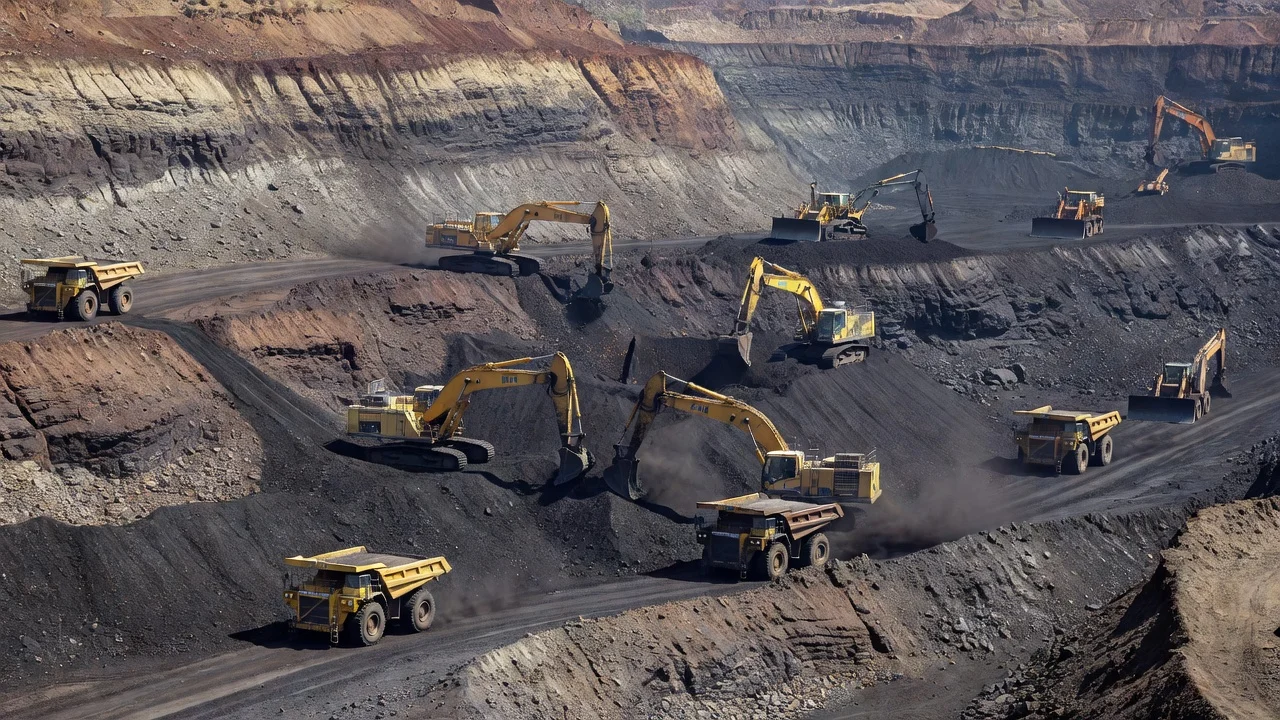
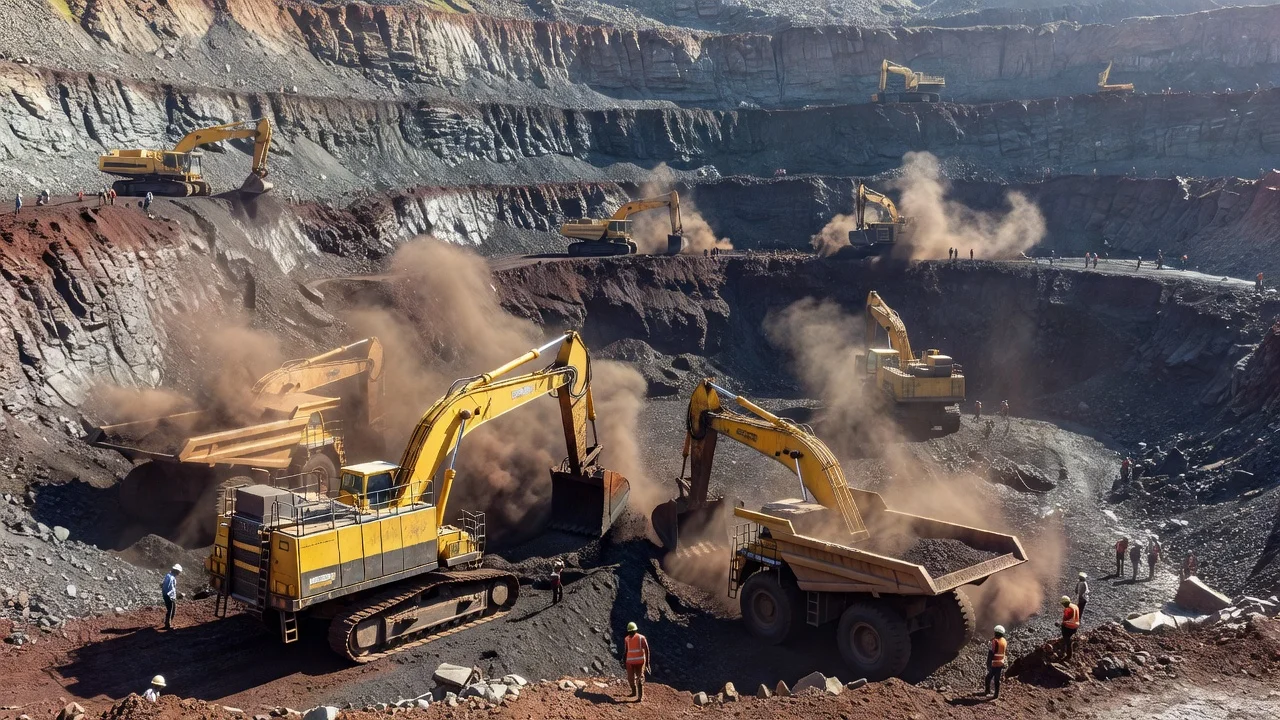
Landing a job at Coal India Limited is a career milestone for thousands of diploma holders who graduate from mining engineering polytechnics every year. As the single largest coal producer on the planet and a Maharatna public sector undertaking, CIL operates through seven wholly owned subsidiaries spread across eight Indian states — and each one of them recruits mining diploma holders on a regular basis. The roles on offer are not desk jobs. They place you inside active collieries, underground shafts and opencast pits where safety, precision and real-time decision-making are part of the daily routine. What makes this recruitment pipeline especially attractive is that it does not require a four-year engineering degree. A three-year diploma combined with the right DGMS competency certificate opens the door to stable PSU employment, structured pay under the National Coal Wage Agreement and a career ladder that can stretch all the way to senior mine management.
How Coal India's recruitment structure works
Coal India does not centralise its non-executive hiring. Each subsidiary company — South Eastern Coalfields (SECL), Mahanadi Coalfields (MCL), Western Coalfields (WCL), Northern Coalfields (NCL), Central Coalfields (CCL), Eastern Coalfields (ECL) and Bharat Coking Coal (BCCL) — publishes its own recruitment notification with vacancy details, eligibility criteria and exam schedule. This decentralised model means diploma holders need to track each subsidiary individually, because application windows often stay open for only two to three weeks and missing a notification can mean waiting an entire year for the next cycle.
The recruitment pattern follows a consistent framework regardless of which subsidiary is hiring. The process starts with an online application on the subsidiary's official website, followed by a computer-based test, document verification and a medical fitness examination. There is no interview stage for non-executive posts like Mining Sirdar, Junior Overman or Surveyor — selection depends entirely on your CBT score and whether you meet the eligibility and medical standards.
In 2026 alone, subsidiaries have announced thousands of vacancies. MCL released 667 posts covering Mining Sirdar, Junior Overman and Surveyor positions. SECL advertised 1,055 vacancies for Mining Sirdar, Deputy Surveyor and Assistant Foreman. WCL announced 444 posts for Mining Sirdar and Assistant Foreman. NCL invited applications for 249 Mining Sirdar and Surveyor positions. Together, these numbers represent one of the largest intake cycles for mining diploma holders in recent memory.
Who can apply: eligibility requirements
The eligibility framework for diploma holders at Coal India subsidiaries rests on three pillars: educational qualification, statutory certification and age. Meeting all three is non-negotiable — if even one is missing on the cut-off date mentioned in the notification, the application will be rejected at the document verification stage regardless of how well you scored on the CBT.
Candidates who hold a three-year diploma in mining engineering from an institute recognised by the Central Government are eligible to apply for positions like Junior Overman and Mining Sirdar. The diploma must be a full-time, regular programme. Distance learning, part-time or correspondence qualifications are explicitly rejected in all CIL subsidiary notifications. For Mining Sirdar specifically, the eligibility is slightly broader — matriculation (Class 10) combined with a valid Mining Sirdarship Certificate of Competency from DGMS also qualifies, making this post accessible even to candidates who entered the workforce through the vocational training route.
On top of the diploma, every applicant needs valid DGMS-issued competency certificates that match the post they are applying for. For Junior Overman, this means an Overman's Certificate of Competency under the Coal Mines Regulations 2017, along with valid Gas Testing and First Aid certificates. Some subsidiaries also require one year of post-diploma practical training in coal mines. For Surveyor positions, a Surveyor's Certificate of Competency from DGMS is mandatory, though a diploma or degree in mine surveying engineering serves as an alternative educational route.
The age window for general and EWS candidates is 18 to 30 years as of the crucial date specified in each notification. Reserved categories receive standard relaxations: three years for OBC (Non-Creamy Layer), five years for SC and ST, and additional relaxations for ex-servicemen and persons with benchmark disabilities. Departmental candidates already employed by CIL or its subsidiaries are exempt from the upper age limit entirely, which is one of the strongest incentives for internal mobility within the Coal India ecosystem.
Salary and benefits under NCWA-XI
Compensation is one of the most compelling reasons diploma holders target Coal India over private mining companies. The latest National Coal Wage Agreement (NCWA-XI) sets the basic pay for Mining Sirdar and Junior Overman at ₹47,330.25 per month. For Surveyor, the basic pay is slightly higher at ₹51,103.12. These figures represent only the starting point — the gross monthly package increases substantially once allowances are added.
The table below breaks down what a freshly recruited Mining Sirdar can expect to earn in hand during the first year, based on the standard NCWA-XI structure and typical allowance components for an opencast posting.
| Component | Monthly amount (₹) |
|---|---|
| Basic pay | 47,330 |
| Variable dearness allowance | 18,000 – 22,000 |
| Attendance bonus | 2,500 |
| Special allowance | 3,500 – 5,000 |
| HRA (or company accommodation) | 4,000 – 8,000 |
| Transport subsidy | 1,500 – 2,500 |
| Gross monthly salary | 77,000 – 87,000 |
| Provident fund deduction | ~5,600 |
| In-hand monthly salary | ~65,000 – 75,000 |
Underground postings attract an additional risk allowance ranging from ₹5,000 to ₹10,000 per month, and the exact gross figure varies depending on the subsidiary, posting location and whether the candidate opts for company-provided housing or HRA. These numbers position a diploma-level recruit at Coal India well above the starting salary of most private mining jobs, and the gap widens further with annual increments, DA revisions and promotion-driven pay increases.
Beyond the monthly paycheck, CIL employees receive comprehensive benefits including medical coverage for the entire family under the company's medical attendance rules, provident fund contributions, gratuity, earned leave and a pension through the Coal Mines Pension Scheme. The job security of a PSU appointment, combined with these benefits, makes the total compensation package highly competitive even when compared to engineering graduate roles in other sectors.
The CBT exam pattern in detail
Every subsidiary uses a nearly identical computer-based test format for Mining Sirdar, Junior Overman and Surveyor recruitment. Understanding the pattern inside out is the first step toward building an effective preparation plan, because the exam does not test advanced engineering theory — it tests practical mining knowledge, regulatory awareness and basic aptitude.
The CBT consists of 100 multiple-choice questions, each carrying one mark, for a total of 100 marks. There is no negative marking, which means candidates should attempt every single question regardless of confidence level. The paper is bilingual — questions appear in both English and Hindi, with the English version considered final in case of any discrepancy. The test duration is typically 90 minutes.
The question distribution splits into two sections. Section A covers general awareness and aptitude — 20 questions on general knowledge, current affairs, reasoning, mathematical ability and awareness of the coal industry. Section B carries the remaining 80 questions and focuses entirely on domain or technical knowledge related to the specific post. Because the technical section carries four times the weight of the general section, preparation should be heavily skewed toward mining-specific subjects.
Qualifying marks differ by category. General and EWS candidates need at least 45 out of 100. OBC (Non-Creamy Layer) candidates need 40. SC, ST and PwBD candidates need 35. Meeting the qualifying threshold is necessary but not sufficient — the final merit list is prepared based on actual scores, so aiming well above the minimum is the only reliable strategy for selection.
What the technical syllabus actually covers
The domain knowledge section does not have a single published syllabus that applies uniformly across all subsidiaries, but the recurring topics across recent notifications from MCL, NCL, SECL and WCL follow a recognisable pattern rooted in the Coal Mines Regulations 2017 and the practical responsibilities of the post.
The following areas appear consistently in CBT papers across subsidiaries:
- Coal Mines Regulations 2017 — duties and responsibilities of Mining Sirdars, Overmen and other officials; provisions related to ventilation, support systems and safety in underground and opencast workings
- Mines Act 1952 and related rules — health, safety, welfare provisions, working hours and the legal framework governing mine operations
- Mine ventilation and gas detection — types of mine gases, detection methods, ventilation systems, gas testing procedures and emergency response to dangerous concentrations
- Drilling and blasting — types of explosives used in coal mines, blasting procedures, shot-firing safety protocols and transport and storage of explosives
- Support and strata control — methods of timbering, roof bolting, anchorage testing, support withdrawal and preliminary knowledge of longwall face equipment salvaging
- Opencast mining safety — working at heights, handling heavy materials, operation near water bodies or unconsolidated mass, and marching of heavy earth-moving machinery
- General geology — rock types, geological disturbances like faults and folds, and their implications for mine safety and planning
- First aid procedures — emergency response techniques used in mining accidents, rescue operations and the Coal Mines Rescue Rules 1985
- Reports and documentation — writing of statutory reports required from Mining Sirdars and Overmen under the regulations
Mastering these topics requires a combination of textbook study and familiarity with the actual regulations. The Coal Mines Regulations 2017 document is freely available and should be treated as a primary reference rather than a supplementary one — many questions are framed directly around specific provisions and clauses.
A practical preparation strategy
Preparing for a Coal India subsidiary CBT is different from preparing for a university exam. The test rewards breadth over depth, speed over elaboration and regulatory knowledge over theoretical derivation. Candidates who approach the exam like a traditional engineering paper often struggle, while those who focus on the exam's specific structure and question types tend to perform better.
Building a solid preparation plan involves several phases, each with a clear objective and timeline.
- Gather the official notification and syllabus — download the latest notification from the subsidiary's website and identify the exact syllabus topics mentioned. Cross-reference with previous notifications from other subsidiaries, as the core topics overlap significantly.
- Read the Coal Mines Regulations 2017 cover to cover — this is the single most important document for the technical section. Highlight provisions related to Mining Sirdar and Overman duties, ventilation standards, support requirements and blasting safety.
- Study the Mines Act 1952 and Coal Mines Rescue Rules 1985 — these acts form the regulatory backbone of the exam. Focus on sections that define responsibilities, safety procedures and emergency protocols.
- Practise previous year question papers — solving past papers from MCL, NCL, SECL, WCL and CCL reveals the question patterns, repeated topics and the level of difficulty you can expect. Many coaching platforms and YouTube channels dedicated to Coal India exams provide topic-wise previous year questions for free.
- Prepare for the general awareness section — allocate about 20% of your study time to general knowledge, current affairs, basic reasoning and numerical ability. Questions in this section are straightforward, so consistent daily practise with standard aptitude material is sufficient.
- Take mock tests under timed conditions — since the exam has 100 questions in 90 minutes with no negative marking, speed is critical. Mock tests help you build the habit of answering quickly and skipping difficult questions to return to them later.
- Focus on the coal industry awareness segment — questions about Coal India's structure, its subsidiaries, production figures and the coal sector in India appear regularly. A few hours of reading about CIL's organisational setup and recent developments can secure easy marks.
- Organise your documents early — gather your diploma certificate, DGMS competency certificates, Gas Testing certificate, First Aid certificate, caste or category certificates if applicable, and a valid photo ID. Keep scanned copies ready for the online application and originals for document verification.
The preparation timeline typically should span three to four months of focused study, with the final month dedicated almost entirely to mock tests and revision. Candidates who are already working in mines have an advantage in the technical section because the questions mirror real-world scenarios they encounter daily, but they need to compensate by dedicating consistent study time despite shift work.
The selection process after the exam
Scoring above the qualifying mark on the CBT is only the first hurdle. The selection process continues with two additional stages that are equally critical — document verification and the initial medical examination — and either one can end a candidate's journey if not taken seriously.
Document verification is conducted for candidates who make it to the merit list based on CBT scores. Every certificate mentioned in the notification must be produced in original along with self-attested photocopies. This includes the diploma mark sheets and certificate, DGMS competency certificate, Gas Testing certificate, First Aid certificate, matriculation certificate as proof of date of birth, caste or category certificate in the prescribed format, and a valid photo ID. Any discrepancy between the information declared in the online application and the actual documents leads to immediate disqualification. The subsidiary's medical committee also reviews the candidate's fitness during a separate Initial Medical Examination, which tests vision, hearing, general physical fitness and the ability to work in underground or opencast mine conditions. The medical committee's decision is final and binding — there is no appeal process.
Candidates who clear both stages receive an offer of appointment specifying their subsidiary posting. New recruits are typically required to execute a service bond committing to serve the company for a minimum period, and the posting location is determined by the subsidiary based on operational requirements. Being willing to serve anywhere in India is a prerequisite — candidates with strong geographic preferences may find this limiting, but for most diploma holders, the stability and pay more than compensate for relocation.
Common mistakes to avoid
Every recruitment cycle, a significant number of candidates are disqualified for reasons that have nothing to do with their exam performance. Understanding these pitfalls beforehand can save months of wasted preparation. One of the most frequent errors is allowing DGMS certificates to lapse before the cut-off date. Gas Testing and First Aid certificates have validity periods, and an expired certificate on the crucial date mentioned in the notification renders the entire application invalid, even if the candidate scored exceptionally well on the CBT.
Another common mistake is misjudging the medical standards. Mining is physically demanding, and CIL's medical examination is thorough. Candidates with uncorrected vision problems, chronic conditions affecting physical stamina or colour blindness that affects the ability to identify warning signals may be declared unfit. Reviewing the medical attendance rules on the CIL website before applying helps set realistic expectations and prevents disappointment at the final stage.
Finally, many candidates underestimate the general awareness section. Because it carries only 20 marks out of 100, some assume it can be safely ignored. In practice, these 20 marks often make the difference between selection and rejection in competitive categories where cut-offs are separated by just a few points. A candidate who scores 80 on the technical section but only 5 on the general section totals 85 — which may not be enough when thousands of applicants are competing for a few hundred posts.
Why Coal India remains the top destination for mining diploma holders
The combination of job security, structured pay growth, comprehensive benefits and a clear career ladder makes Coal India subsidiaries the most sought-after employers for mining diploma holders in India. No private mining company offers the same level of stability or the same range of long-term opportunities. Starting as a Mining Sirdar or Junior Overman, a diploma holder who consistently acquires higher DGMS certifications and accumulates underground experience can progress to Foreman, then to Second Class Mine Manager and eventually to First Class Mine Manager — positions that carry significant authority and compensation comparable to senior engineering roles in any industry.
The 2026 recruitment cycle, with its unusually high vacancy numbers across multiple subsidiaries, represents a particularly strong opportunity. Whether you are a fresh diploma graduate preparing for your first DGMS exam or an experienced mining professional looking to move into the PSU sector, the window is open — and with the right preparation strategy, it is very much within reach.